Selecting a microscope involves more than comparing hardware specifications and software features. Long-term
stability and the ability to upgrade to future requirements can have a major impact on the value a system delivers
throughout its lifetime. Additionally, factors such as quality control procedures and service support play an
important role in ensuring reliable operation and protecting the investment over time.
This article reviews key considerations related to quality assurance, service support and system upgradability when
comparing benchtop fluorescence microscopes of different providers.
Quality Control Programs
Quality control (QC) programs are structured procedures and standards that verify whether a microscope performs
within defined specifications. They are critical to ensure consistent and reliable imaging results comparable across
experiments, users, and instruments. Well-designed QC procedures help distinguish true biological variation from
instrument‑related effects. This is particularly important for long‑term studies, multi‑site collaborations, and work
conducted in regulated environments.
Not all manufacturers provide transparent QC frameworks. Therefore, it is important to evaluate how each system is
tested, validated, and documented.
What to look for in quality control programs:
- Published test protocols: Clear documentation describing how system performance is measured and
validated
- Defined performance specifications: Quantitative pass/fail criteria that outline acceptable
tolerances and allow objective comparison between instruments
- Routine verification options: Tools or services that enable periodic performance checks to track
system stability over time
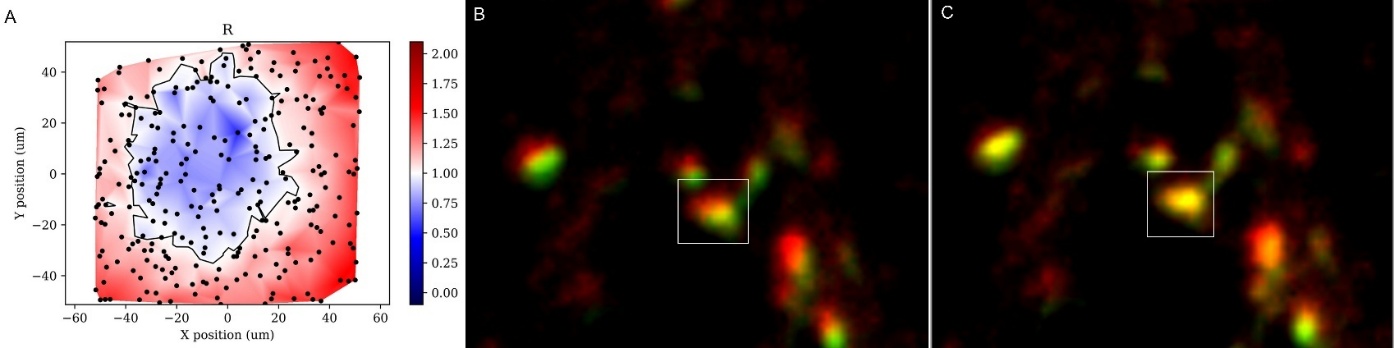
Fig. 1 — IQ/OQ enables microscopists to verify the reliability of research data. (A) Heat map of colocalization
generated by the Oxford Instruments BC43 microscope. (B, C) Images of the same sample acquired in two different
fields of view on the same microscope. These illustrate how apparent colocalization can vary depending on imaging
conditions. The IQ/OQ heat map provides an objective method to assess whether true colocalization is present,
allowing researchers to validate their imaging results with confidence. Notably, lateral aberration is observed
across all microscopes; however, the Oxford Instruments BC43 uniquely provides a heat map tool that enables direct
validation of colocalization accuracy.
Service
Service and post-sales support are important factors when purchasing a microscope, as they directly influence system
uptime, maintenance costs, and long-term usability.
Before deciding on a system and service model, it is useful to clarify the following points:
- Which service options (on-demand vs contract tiers) align with your budget, usage pattern, and risk tolerance?
- What maximum downtime can your imaging workflow tolerate (hours, days, or weeks)?
- Which additional services (e.g. application support, quality control) are relevant to your use case?
| Standard service models |
Description |
| On-demand support |
- No maintenance contract, services are purchased per incident
- Lowest upfront costs
- Unpredictable response times, system downtimes and expenses
|
| Basic contract |
- Includes preventive maintenance and, in some cases, software updates
- Preventive
maintenance reduces the likelihood of unexpected repair costs compared with on-demand support
|
| Intermediate contract |
- Includes preventive maintenance, software updates, labour and travel
- Spare parts are
usually discounted
- Offers balanced protection with predictable annual costs
|
| Premium contract |
- Includes priority support
- Typically covers preventive maintenance, software updates,
spare parts, labour, and travel
- Often bundled with remote application support for workflow guidance and
onboarding
- Minimises downtime and financial risk
- Highest initial investment but lowest operational
uncertainty
|
Add-on service products to consider
-
- IQ/OQ - Installation Qualification, Operational Qualification Provides a formal, quantitative
quality-control framework
- Ensures the system meets strict performance specifications beyond installation and throughout its lifetime
- Application support and trainingRemote or on-site sessions to support workflow setup,
protocol optimisation, and user training
- Helps standardise measurements across users and accelerates the learning curve
- Biosafety (BSL-3/4) service packagesValidated protocols for safe and thorough decontamination
and fumigation of microscopes
- Designed for use in high-security laboratory environments
- Protect optical and mechanical components and ensure continued system operability
Upgradability
System upgradability is available for some, but not all, benchtop microscopes. Upgrade-ready systems allow
instrumentation to evolve as research questions, imaging requirements, and analysis needs change over time. Although
such systems may require a higher initial investment, they can offer substantial long-term value by enabling expansion
and reconfiguration without the need to replace the entire microscope.
When evaluating upgradability, it is important to understand both the technical scope of possible upgrades and the
manufacturer's long-term strategy.
Key Considerations
- Add imaging modalities: Expand to widefield, confocal, or super-resolution solutions as needs
grow
- Upgrade detectors: Replace or add cameras to improve sensitivity, speed, or field of view as
newer sensors become available
- Extend optics and software: Integrate additional light sources, objectives, filters, and analysis
modules to match new workflows
- Plan for future extensions: Confirm availability of hardware and software components to maintain
performance and compatibility over time
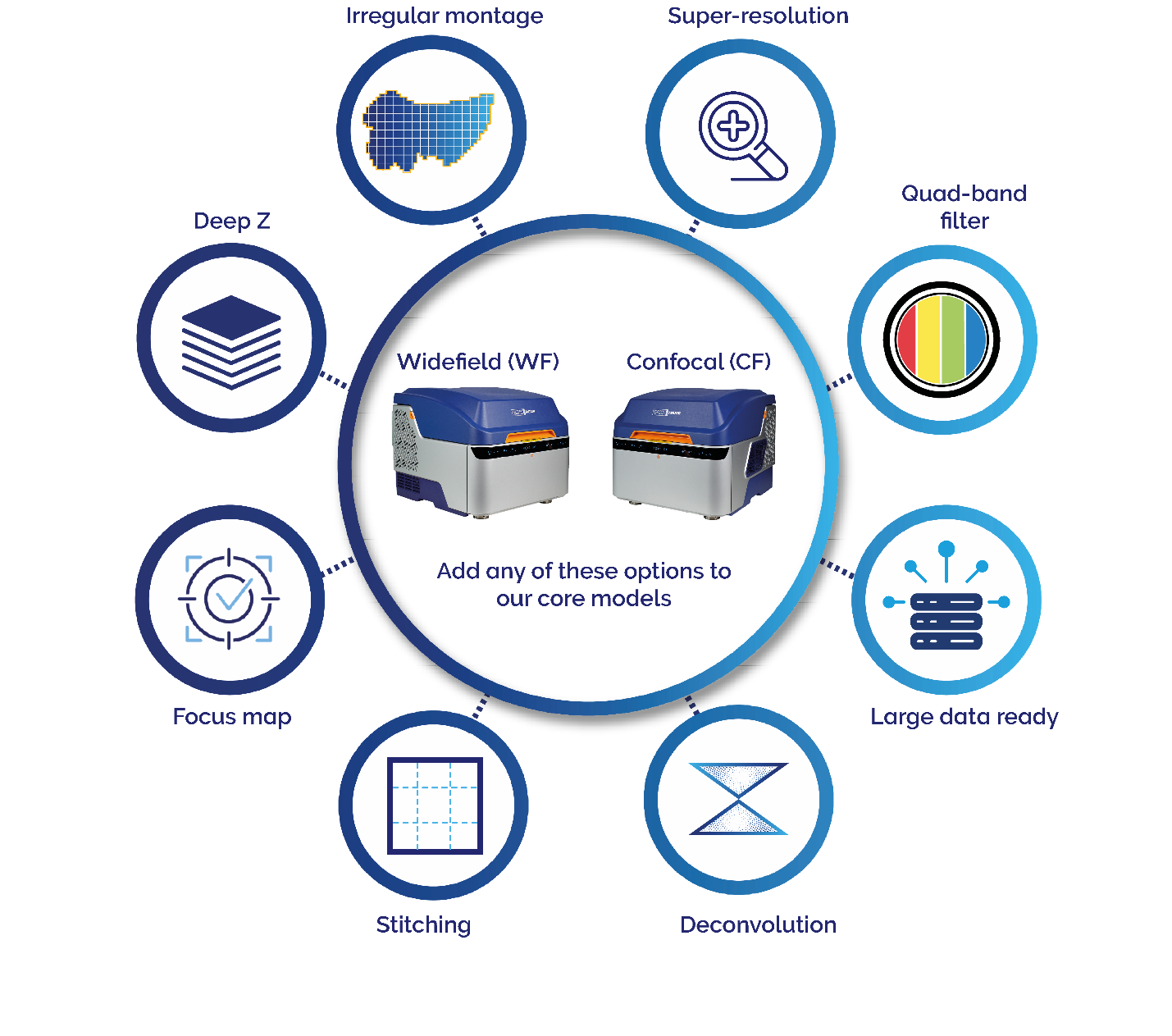
Fig. 2 — BC43 2 models, widefield and confocal. Start with widefield or confocal, both fully upgradable to the
complete range of hardware and software options.
Exploring Benchtop Fluorescence Microscopes?
Learn more about the key technologies, components and practical considerations involved in selecting a benchtop
fluorescence microscope.
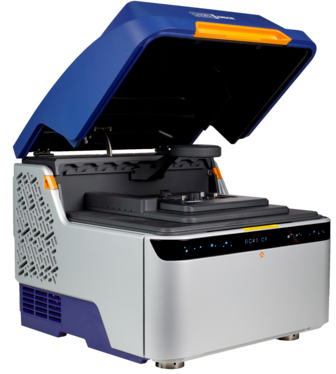
BC43 – Exceptional Performance, Certified Quality, High Productivity
- Oxford Instruments has played a leading role in establishing transparent quality standards. In collaboration with
experts from the QUAREP-LiMi community*, the company developed an Installation Qualification / Operational
Qualification (IQ/OQ) framework that sets hard performance specifications for all BC43 systems. Each instrument must
meet these specifications before leaving the factory. Pass/fail criteria and detailed test protocols can be found here.
- In addition to the built-in IQ/OQ standards, users can opt for certification and validation services at
installation and during the lifetime of the instrument to document system performance verification.
- BC43 service offerings (Oxford Instruments)
- Service contract tiers from on-demand to premium including priority response and remote application support
- Biosafety level service: BSL-3/4 compatible service warranty package
- Flexible installation packages: Self-installation or field-engineer installation with user and maintenance
training or full IQ/OQ installation. See all options here.
- The BC43 is designed as a modular benchtop platform that supports staged expansion over time. Widefield systems
can be upgraded to confocal and SRRF‑based super‑resolution as requirements evolve, and many optical components can
be replaced to match new applications.
* Consortium for Quality Assessment and Reproducibility for Instruments and Images in Light
Microscopy