

July 30, 2026
Oxford Instruments celebrates scientific innovation in the WITec Paper Award 2026
Winning studies in photovoltaics, plant science and dental analysis showcase the breadth of Raman microscopy applications
Oxford Instruments is proud to announce the winners of the WITec Paper Award 2026, recognising outstanding scientific achievement and innovation enabled by Oxford Instruments’ Raman technology.
This year, three research teams were recognised for their pioneering work in solar cell diagnostics, plant microchemistry, and dental research, highlighting the versatility and impact of Raman microscopy across diverse scientific applications.
We congratulate the winning teams from China, Austria and France, and thank all participants from across the world for sharing their research in this year’s competition.
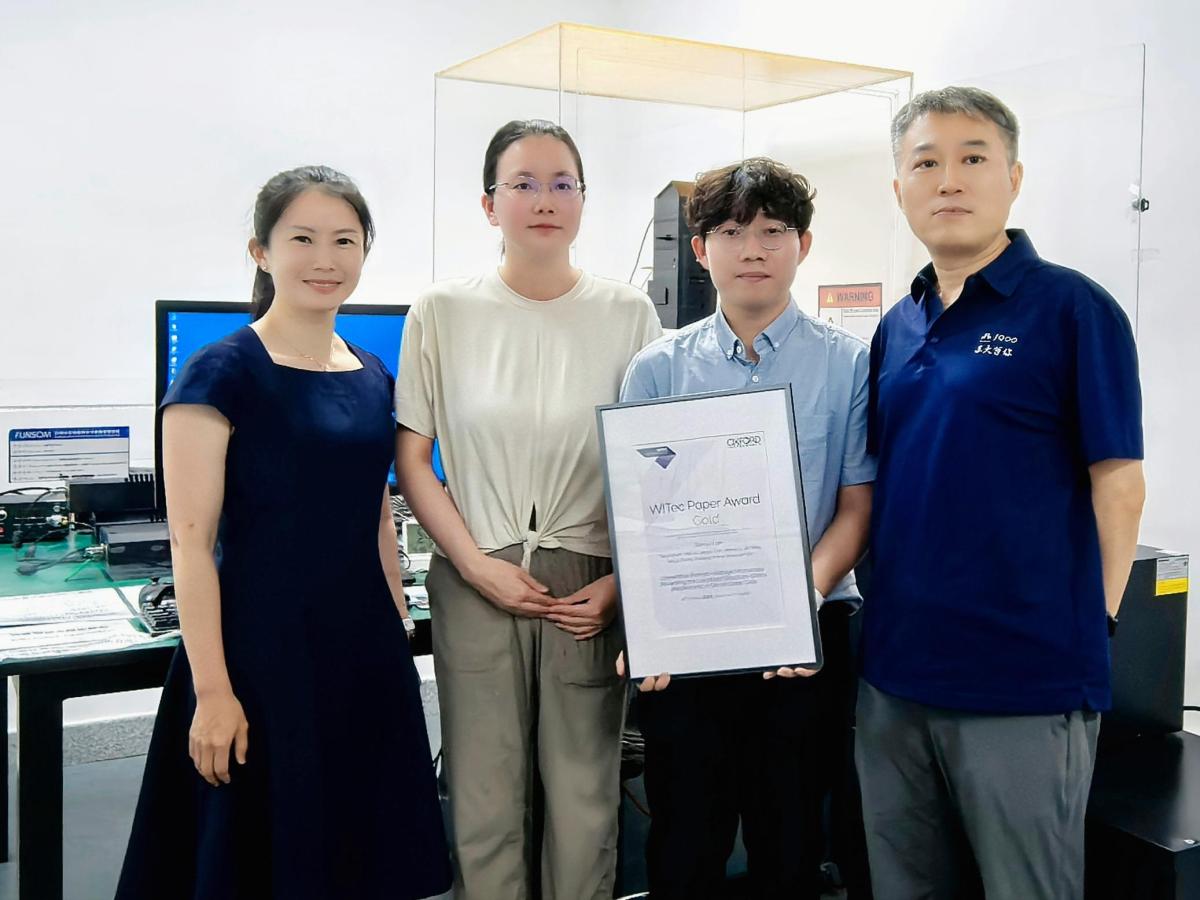
- GOLD:
Tianyu Lan, Tianyi Zhao, Yan Liu, Jingyu Cao, Wenqi Li, Jie Yang, Xinyu Zhang, Yusheng Wang, and Baoquan Sun. Correlative Raman–Voltage Microscopy Revealing the Localized Structure–Stress Relationship in Silicon Solar Cells. ACS nano 19(4), 4473-4483 (2025). DOI: 10.1021/acsnano.4c13688
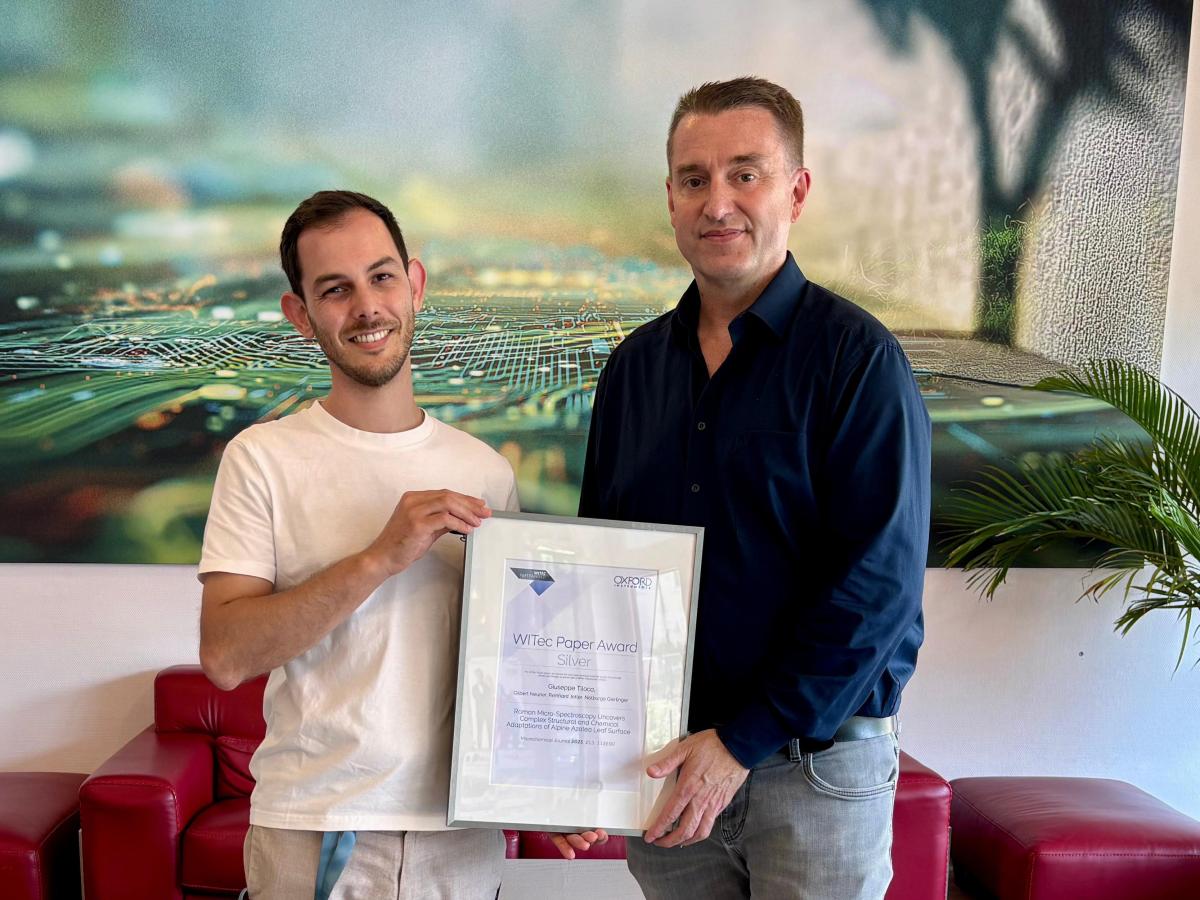
- SILVER:
Giuseppe Tiloca, Gilbert Neuner, Reinhard Jetter, and Notburga Gierlinger. Raman micro-spectroscopy uncovers complex structural and chemical adaptations of alpine azalea leaf surface. Microchemical Journal 213, 113690 (2025). DOI: 10.1016/j.microc.2025.113690
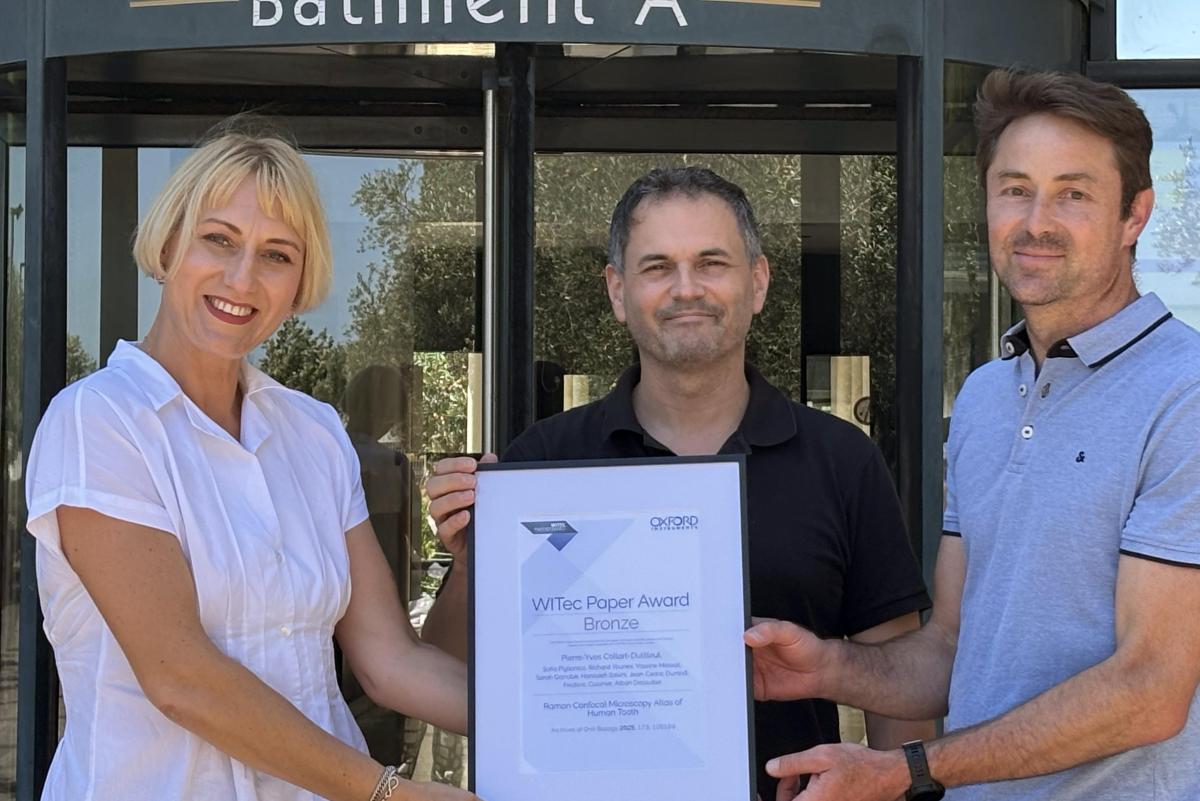
- BRONZE:
Pierre-Yves Collart-Dutilleul, Sofía Piglionico, Richard Younes, Yacine Messat, Sarah Garrabé, Hamideh Salehi, Jean-Cédric Durand, Frédéric Cuisinier, and Alban Desoutter. Raman confocal microscopy atlas of human tooth. Archives of Oral Biology 173, 106189 (2025).
DOI: 10.1016/j.archoralbio.2025.106189
For a list of all previous award-winning publications, please visit the Paper Award website.
Paper Award GOLD: Linking mechanical stress and electrical performance in solar cells
The performance and reliability of modern silicon solar cells depend strongly on material integrity. As silicon wafer thickness decreases, even small defects can impair device performance. This creates a need for metrology tools that efficiently detect defects and analyse their effects.
Conventional methods often lack the capabilities to visualise defects at a submicron scale and analyse their impact on device behaviour. Researchers from Soochow University (Suzhou, China) and Zhejiang Jinko Solar Co. Ltd (Haining, China) addressed this challenge by combining high-resolution Raman microscopy with photovoltage and photocurrent mapping. This approach enabled the team to visualise micro-cracks, micro-indents and mechanical stress distributions, and directly correlate these with electrical output in the same region.
Their results show a clear relationship between tensile stress and reduced electrical output at micro-crack sites. The study also shows that rear-side processing of solar cells leads to localised stress at the rear surface, promoting crack formation and propagation.
Overall, this work demonstrates a powerful approach for microscale strain mapping in photovoltaic modules, providing valuable insight for device design.
Paper Award SILVER: Mapping chemical adaptation in alpine plant surfaces
Plant leaf surfaces mediate the exchange of substances between the plant and its environment. At the same time, they must provide protection against environmental stress, such as temperature fluctuations, solar radiation and strong winds.
Researchers from the University of Natural Resources and Life Sciences (Boku University, Vienna, Austria), the University of Innsbruck (Austria), and the University of British Columbia (Vancouver, Canada) investigated how alpine azalea adapts structurally to withstand the harsh conditions of its environment. Using confocal Raman imaging, they were able to analyse leaf samples in situ, and resolve chemical variations across multiple cuticle layers and leaf structures.
The results reveal a complex and non-uniform composition with chemical differences between the upper and lower leaf surfaces. Variations in the distribution of alkanes, triterpenoids, and phenolic compounds show how the plant tailors its chemistry to different environmental exposures.
These findings provide new insight into how plant surfaces adapt at the microscale and demonstrate how chemical heterogeneity supports resilience in extreme habitats, linking local composition directly to biological function.
Paper Award BRONZE: A complete Raman atlas of the human tooth
The human tooth consists of several mineral and organic components that are highly organised to form its unique stable structure. Researchers at the University of Montpellier (France) have for the first time presented a complete Raman microscopy chemical mapping of the healthy human tooth for a unified view of the tooth’s complex structure across various scales.
Using Raman imaging, the authors were able to visualise the mineralised components enamel, dentin, and cementum, alongside key structures such as junctions and growth bands. Their results confirm known structural elements, while also revealing features not previously visualised. This includes the detection of organic material at enamel junction regions and localised increases in hydroxyapatite concentration in the peritubular zone.
Combined, these findings contribute to a better understanding of how local differences in mineral and organic composition relate to structural organisation and properties. The atlas created in this work provides a valuable reference for dental research and demonstrates how Raman imaging enables non-destructive, high-resolution chemical characterisation of complex biological materials.
About Oxford Instruments plc
Oxford Instruments provides academic and commercial organisations worldwide with market-leading scientific technology and expertise across its key market segments: materials analysis, semiconductors, and healthcare & life science.
Innovation is the driving force behind Oxford Instruments' growth and success, supporting its core purpose to accelerate the breakthroughs that create a brighter future for our world. The vigorous search for new ways to make our world greener, healthier and more productive is driving unprecedented levels of R&D investment in new materials and techniques to support productivity and decarbonisation worldwide, creating a significant opportunity for Oxford Instruments to grow.
Oxford Instruments holds a unique position to anticipate global drivers and connect academic researchers with commercial applications engineers, acting as a catalyst that powers real world progress. Founded in 1959 as the first technology business to be spun out from Oxford University, Oxford Instruments is now a global, FTSE250 company listed on the London Stock Exchange (OXIG).
For more information, visit www.oxinst.com
Press Contact
Oxford Instruments
Lise-Meitner-Str. 6, 89081 Ulm, Germany
Phone: +49 (0) 731 140 70 0
E-mail: info.witec@oxinst.com
https://Raman.oxinst.com
