Learn more about the difference we make in the world:
Greener economy
Greener vehicles

Learn more about how we help manufacturers develop new materials for electric vehicles
Greener vehicles

As we all become more mindful about the impact we are having on the environment, car manufacturers are facing a range of technical challenges in order to reduce the negative impact vehicles can have. This is leading to an increase in global standards that are mandating the need for better fuel efficiency, new low-carbon fuels and batteries that last longer. It is also creating further reliance on electronics and sensors in order to support the continued growth of autonomous vehicles.
The automotive industry is under constant pressure to design vehicles that will meet the market place demands on cost reduction, improved fuel economy, enhanced safety, effective emission control, recyclability and life cycle consideration. Car designers and material scientists work to develop advanced materials with the properties that are required to meet these demands.
They use our imaging and analysis solutions on electron microscopes to see tiny details about the composition and structure of the materials to understand more about how they will perform and meet the objective of building safer, environmentally friendly cars.
Enhancing vehicles

Learn more about how we are helping improve autonomous vehicle safety
Enhancing vehicles

Electric vehicles are widely seen as one of the most important innovations in transportation. As technology develops and we focus more on renewable energy and improved urban air quality, demand for them will continue to increase. We are providing manufacturers with the solutions to address range, recharge speeds and reduction in energy loss. We also are enabling the manufacture of advanced sensors to help improve the safety of autonomous vehicles.
New battery solutions

Learn more about our role in developing next generation battery materials
New battery solutions

Many people believe we are on the cusp of a power revolution. Over recent years, technology has made huge leaps forward, whilst the batteries powering it have remained largely unchanged for decades. A number of drivers are creating the demand for new advanced batteries, with the choice of materials, structure and composition impacting a battery’s ability to store and output energy, and how often it can be charged and discharged.
An example we are all familiar with is our smartphones, with amazing processing capabilities in the palm of your hand. Battery researchers are looking for alternative materials to replace finite and expensive components such as lithium, nickel and cobalt. By finding more sustainable alternatives, such as silicon, manufacturers hope to produce cheaper, lighter and more powerful batteries that allow for faster charging, and longer lifetime for the devices and technology they support.
Our imaging and analysis solutions are being used to develop these next generation battery materials and structures as well as to help quality assurance and control in the manufacture of existing battery solutions.
Alternative energy

Learn more about our solutions for a low-carbon economy
Alternative energy

The World Health Organization has said climate change is the greatest threat to global health in the 21st Century. Since the 1800s, human activities have been the main driver of climate change, predominantly through the burning of fossil fuels. We have all seen or experienced the impact this is having on the world: increased flooding, extreme heat, and food and water scarcity. With a global commitment to achieve net zero, reducing carbon emissions to the lowest level possible, by 2050, there is increasing pressure on everyone to phase out the use of and reliance on fossil fuels.
The challenge, however, is finding alternative energy sources that offer the same performance capabilities, and while fossil fuels remain plentiful and inexpensive it can be difficult for many to make the transition. One widely available alternative is solar energy, with the level of solar energy reaching habitable land being 1,000 times the amount of fossil fuel energy extracted globally per year. The problem is finding a way to capture, convert, store and distribute this energy efficiently and affordably.
Solar panels offer the solution, with researchers looking at how to make these more efficient and cost effective. Our enabling technologies, including our material analysis tools, are helping manufacturers and researchers image and analyse solar cells to understand how composition impacts performance, allowing them to design enhanced capabilities into the cells. Our products offer users unique insight as their sensitivity provides visualisation with minimal damage to the sample, letting them analyse solar cell details that were previously impossible to capture.
Batteries offer a further alternative to fossil fuels and can facilitate more sustainable travel, as well as providing efficient and affordable storage for renewable energy. Batteries require less maintenance and run cleaner than traditional fuel convertors, however they must overcome a few challenges before they can fully permeate the transport market. This includes making them lighter, more cost effective and more energy efficient in regard to discharge and recharge times.
Our atomic force microscopes (AFM), nuclear magnetic resonance (NMR) and material characterisation solutions are being used by many battery manufacturers to help them understand more about the properties of batteries at the nanoscale and how these change over the lifetime of a battery. This is helping researchers find new battery materials and structures that could translate into lower cost, higher performing, more environmentally friendly solutions. By being close to our customers we have been able to stand out in the market with a tailored portfolio of solutions dedicated to the specific needs of the battery market.
We continue to look for further opportunities to offer solutions that can help those working to accelerate our transition to a low-carbon economy.
Increased connectivity
Greener data centres

Learn more about how our solutions are helping data centres operate more efficiently
Environmentally friendly data centres

Today, data plays a vital role in every decision-making process. We rely on being connected online to keep in touch with our friends and family, to work remotely, for entertainment, shopping and learning. We are creating more data than ever before and with the introduction of advances such as 5G and the Internet of Things, the demand will continue to grow, putting a strain on the data centres that gather, store and distribute the data. As a result, there is an increasing need for data centres to meet the demands on speed and bandwidth as we want instantaneous information at our fingertips.
These data centres must run 24/7 and, in doing so, need to be environmentally friendly. The solution has been to use gallium nitride (GaN) in power conversion chips to create faster, energy-efficient devices; whilst indium phosphide (InP) and gallium arsenide (GaAs) are being used in fibre optic systems to help increase the speed and bandwidth of data processing.
Our etch and deposition solutions are being used to help produce compound semiconductors such as GaN, InP and GaAs. Our leading expertise in the processing of these materials enables our customers to develop more compact devices, faster processing speeds, increased bandwidth and improved efficiency that is required to support the growing demands being placed on communication infrastructure.
Enabling reliable 5G

Learn more about how we helping address the network demands arising from 5G
Enabling 5G

5G is the latest iteration of cellular technology with the prospect of a transformational increase in speed, coverage and responsiveness of wireless networks. As a result of these improvements, there will also be increasing demands on network infrastructure. Our capabilities in compound semiconductors are supporting manufacturers to develop the optoelectronic components, lasers and high-speed electronics required to deliver the improved performance enabling 5G and the rise in the data economy.
Efficient data centres

Learn more about how we help address the demands placed on communication networks
Efficient data centres

With over a 40% increase in global internet traffic during the pandemic, the need for fast internet connectivity, increased data bandwidth and non-stop operating capacity is higher than ever before. This growth comes on the top of rising demand across digital services and an exponential growth in data volumes. This brings the spotlight on the data centres and telecommunication networks such as 5G that facilitate this expanding level of connectivity and data processing.
These centres and networks are moving to new devices and components that can process data and information more quickly and with significantly lower energy consumption to meet the growing demands in an efficient and affordable manner. Compound semiconductors are being increasingly deployed across central processing units, memory, networking and infrastructure to reduce power consumption whilst increasing bandwidth and information processing speeds.
Our etch and deposition solutions are being used to help produce the enabling compound semiconductor devices based on, for example, gallium nitride (GaN) and indium phosphide (InP). Our leading expertise in the processing of these materials enables our customers to develop more compact devices, faster processing speeds, increased bandwidth and improved efficiency at the economic cost of production required to support the growing demands being placed on communication infrastructure.
Enhanced connectivity

Learn more about how our solutions are supporting the rise in 5G and cloud applications
Enhanced connectivity

One thing that has become clear in recent years is that being connected to the internet is no longer just a nice-to-have option, but a necessity that is becoming increasingly vital for everyday activities. The essential nature of connectivity and communication is such that many can no longer imagine life without it; it has become an integral part of working, retail, healthcare, logistics and education.
In line with this, we currently find ourselves in the middle of a technology boom, considered by many to be the next industrial revolution. As technology advances, connectivity is driving personal, social and economic development and the UN has gone so far as to propose having access to internet services should be a part of our human rights. This industrial transformation is being powered by constant connectivity, which demands 24/7 access to high‑speed internet, changing how we live, learn, work and play.
Together, the advancement of technology and the drive for connectivity is driving an unprecedented increase in demand for semiconductor chips, to enhance electronics and provide faster, more accessible bandwidth to ensure ultimate performance from the products.
The range of semiconductor applications is poised to expand dramatically with the spread of 5G, advances in the Internet of Things (IoT), autonomous driving and neural sensors. Devices themselves range from phones and tablets through to washing machines and cars. It is expected that the number of devices that can connect through the IoT will reach 22 billion by 2025. The world is increasingly mobile, as we consume and generate more data every year.
The result of more people trying to connect at once and the increasing amount of data being transferred is a need for faster, more stable and secure networks. The onus is on data centres to meet these requirements as well as on device manufacturers to make products that can help people shape their activities to improve their quality of life.
The huge demand for connectivity is driving demand for our specialised analysis solutions and our compound semiconductor processing systems. As silicon semiconductor chips become smaller, analysis becomes more challenging and the ever more important our tools become. The precision and resolution of our products are clear differentiators for us, making us the supplier of choice for many leading electronic device manufacturers.
Our defect review tools are helping manufacturers during the quality assurance and quality control stage, providing insights into possible performance enhancements for next generation devices. Customers choose us as we ensure their processes deliver the required performance, as well as driving manufacturing efficiency and reducing costs.
Thanks to the relationships we build with our customers, we understand the challenges they face, including increased demand for compound semiconductors which needs improved manufacturing capabilities and higher production yields. Here our specialised processing systems and critical layer solutions are making a positive impact on end device performance, driving down costs and increasing yields. Our solutions are being used to produce high performance indium phosphide devices to help build reliable and fast fibre optic networks supporting the rise in 5G and cloud applications, and the resulting amount of data being produced. Customers choose our products as we can offer significant advantages for them, such as delivering more devices per wafer, improved yield, and enhanced device performance for the end user.
Improving health
Understanding viruses

Learn more about how we are helping researchers understand more about viruses
Understanding Viruses

With thousands of known species, viruses have always been present and endemic within the human population. Spanish Flu in 1918, Asian Flu in 1957 and Swine Flu in 2009 are recent examples of pandemics, and today coronavirus is making headlines. As we are regularly exposed to cold and flu viruses, our bodies are constantly fighting these invaders, keeping them at bay and minimising the impact on our health.
However, some new viruses which seem to suddenly appear can have devastating effects. Genetic evidence shows that viruses slowly evolve and mutate, which then allows them to infect new hosts, resulting in epidemics. Researchers study viruses in order to better understand their genetic makeup, how they mutate and how they reproduce. They then use this understanding to develop diagnostic tests, treatments and vaccines.
Our atomic force microscopes (AFMs) and scientific cameras play an important role in advancing the knowledge of those in this field. Our AFMs can image the virus and measure changes in response to possible treatments, while our cameras are being used in gene sequencing to identify the mutation, as well as in diagnostic analysers and research laboratories, helping scientists with their search for treatments and vaccines.
Cancer research
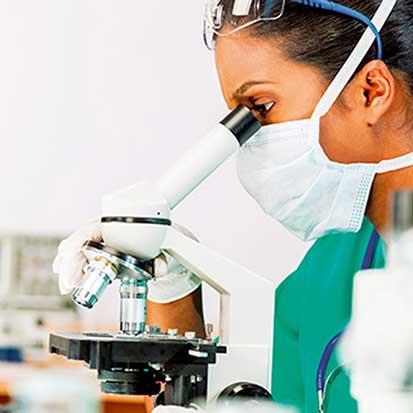
Learn more about how we are enabling breakthroughs in cancer research
Cancer Research
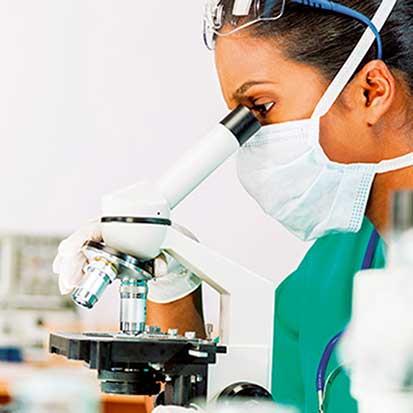
n the UK alone, 1 in 2 people will get cancer in their lifetime. However, while cancer rates are increasing, the number of people who will die from the disease is decreasing. It’s thanks to research that many people are now surviving cancer. With more than 200 different types of cancer, researchers are learning more about what causes the disease and are making breakthroughs in therapeutic responses. The imaging resolution and speed of our products are revealing unprecedented detail in living cells, helping to build an understanding of the complex intracellular mechanisms that underlie a wide range of disease states.
Fighting Covid
Learn more about how we have helped researchers at they took on covid
Fighting Covid

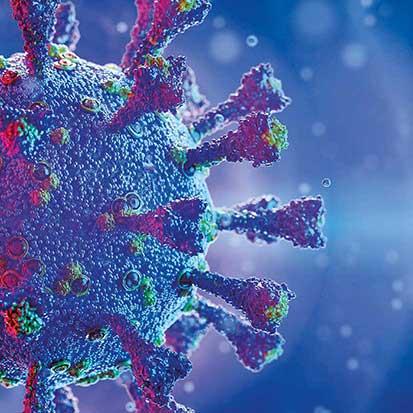
When we first heard about Covid, few could have predicted the impact it would have. To enable scientists to develop an effective vaccine it was essential to develop a better understanding of the virus.
Through research it was possible to map the virus structure, learn more about how it spreads, the impact it has on the body and possible ways of replicating it.
Our atomic force microscopes (AFMs) and scientific cameras have played an important role in advancing the knowledge of those working in this field. Our AFMs can image the virus and measure changes in response to possible treatments, while our laser sources, cameras and microscopy solutions are being used in gene sequencing to identify the mutation, as well as in diagnostic analysers and research laboratories, helping scientists develop better and more accurate treatments and providing a foundation of knowledge to aid vaccine development.
Personalised medicine

Learn more about how we are helping researchers develop a better understanding of our own personal health
Personalised Medicine

By 2050 it is estimated that the global population will have reached nearly 10 billion, with 16% being aged over 65. Growth in age and population in turn increases the number of people living with chronic health conditions, which results in greater pressures on the healthcare system. One way to ease the pressure is by transforming the efficacy of medicines and treatments through developing a better understanding of health and disease at a cellular and molecular level.
Our microscopy solutions are often chosen by researchers working to garner a fundamental understanding of diseases such as cancer, Alzheimer’s, diabetes and cystic fibrosis. Building on our market intimacy we have enhanced our offerings to better meet the specific needs of researchers in this field. For example, we offer imaging capabilities for larger samples in an easy-to-use platform, which was previously unavailable in the market. The sensitivity of our systems is also revealing previously unseen details that show cellular response to stimuli, such as difficult treatment options.
Using these unique insights to build a fuller picture of disease mechanisms, we can help accelerate the speed of drug development. Measuring indications can guide what treatments may, or may not, work, improving the efficacy of medicines and reduce development costs.
Currently it costs around £1.5 billion to bring a single drug to market, and only one drug in 5,000 gets there. The huge development costs result in prohibitively expensive medications or even barriers to their developments for some illnesses. A disease can also vary between patients with the same condition and medications also have a different success rate across patients as well. Currently all patients with a certain condition receive the same initial treatment, even though it may only be 30%-60% effective. This means patients require medical assistance for longer periods of time, putting pressure on healthcare providers, or they are suffering more with a condition than others, impacting their quality of life.
Personalised medicine will help address these issues and is becoming more of a reality. Building on the insights researchers have gathered, the use of gene sequencing is helping unlock insight regarding the individual patient, allowing doctors to develop a treatment plan that will work best for them. The ability of our cameras to capture fine details very quickly is helping researchers use gene sequencing to reveal more about likely responses to different treatment options. This will enable doctors to treat patients more successfully and help reduce spend on ineffective medications.
Accelerating breakthroughs
Looking at the sun

Learn more about how we are helping further understanding about the sun
Looking at the Sun

The sun is our closest star, it was born about 4.6 billion years ago and you could fit about 1 million earths inside it. Humankind has always been fascinated by the sun, using it to tell the time, chart the seasons and create calendars. The drive for deeper understanding of the universe around us and the impact it has on us is driving increased interest in solar astronomy. Mass ejections from the sun can cause huge amounts of damage to satellites, GPS, electricity networks and communications infrastructures.
The ability to understand more about the sun and being able to prepare for a solar storm in advance are paramount to safeguarding these vital services. Our highly sensitive scientific cameras are playing an essential role in ground-based solar imaging, revealing the surface of the sun in unprecedented detail. This is helping solar physicists make giant leaps forward in their understanding of the magnetic dynamics that drive space weather, which can wreak havoc on earth, ultimately helping predict and prepare for future events.
Advancing quantum

Learn more about the disruption potential of quantum technology
Advancing Quantum

Quantum technology exploits the body of science that covers the extraordinary and unconventional behaviour of particles and matter when observed at the smallest of scales and under extreme conditions. Exploiting the quantum nature of matter enables a paradigm shift in performance across a range of exciting applications such as quantum computing, secure communications and medical sensors. We continue to work with leading companies and researchers worldwide to provide the fundamental tools for research and the development of solutions for commercial applications.
Quantum computing
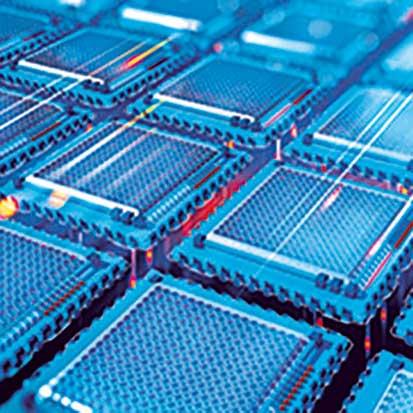
Learn more about how we are helping progress quantum computing
Quantum Computing
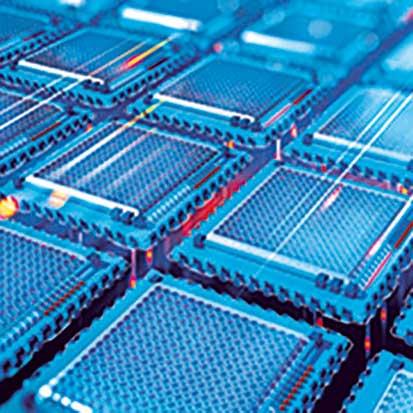
The world continues its journey through the second quantum revolution, as significant scientific and technical breakthroughs in the field are accelerating the timeline for disruptive quantum computers. Quantum computers are capable of processing calculations that are currently considered intractable by traditional computers, providing commercial and strategic advantage to those who can harness their potential.
As a result of being able to make calculations that can handle uncertainty, it is predicted quantum computing could change the world, transforming medicine and logistics, helping to create more efficient products and fighting climate change.
While there has been great progress in recent years, we are still a number of years from harnessing the full potential of quantum.
We are at the forefront of enabling quantum progress through our cryogenic environments, scientific cameras, characterisation solutions and state-of-the-art fabrication capabilities used across fundamental research through to the development and scale-up of quantum computers.
Advancing science

Learn more about how we are helping turn today's science into tomorrow's technology
Advancing Science

Edward Teller famously stated that the science of today is the technology of tomorrow. Another way to think of this is that today’s curiosity is tomorrow’s cure. Many of our everyday essentials would have been considered impossible even a decade ago, but through fundamental science researchers have been able to solve some of the most important challenges the world has faced.
Over the past 200 years there has been a huge rate of change, driven largely by the application of fundamental science to aid economic, social and technological progress. By exploring the limits of what’s possible, researchers have created new understanding and pushed boundaries to explore ideas, test them and expand them, helping to generate the solutions for everyday life, as well as provide answers to some of the great mysteries of the universe. As scientific understanding drives advances in technological capabilities, this in turn can help facilitate new scientific breakthrough and discoveries, a truly virtuous circle.
Our products are helping researchers make these step-change advances, helping to progress a broad range of application areas. It is through the use of our cryogenic refrigerators that we have aided the continued development of quantum technology, helping researchers build quantum computers and supporting the commercialisation of this field. By working closely with our customers to understand their changing needs, we can ensure our products can best support them and anticipate their requirements.
Our advanced solutions are helping researchers to explore and understand the realms of nuclear fusion, which has the potential to influence next generation materials and provide abundant carbon‑free electricity. Thanks to the heightened speed of our products, we can capture what happens in minute fractions of a second, which is key to unlocking nuclear fusion.
Astronomers often choose our high sensitivity scientific cameras to aid their understanding of the world around us, as well as the universe at large. Our cameras are favoured because of their unrivalled speed, extra-large field of view and excellent sensitivity. One recent project is helping facilitate optimal alignment of the mirrors within the Extremely Large Telescope in Chile, which will help reveal details of the birth of the earliest stars and galaxies. This will help answer many of the most pressing, unsolved questions about our universe, which will help us understand more about the earth, the probability of other life-sustaining planets, and possible approaches that could help us address the climate change crisis.