Application
Polyvinyl chloride (PVC) is a versatile thermoplastic which is used for construction, bottles, packaging, floor coverings, coatings and tubing. It can be rigid or flexible, depending on the amount of additives, plasticisers, fillers and pigments added. Each particular type of PVC is the product of blending the PVC resin and defined quantities of selected additives.
It is very important that the plasticiser content is within specification limits to ensure that the product has the correct hardness and flexibility for its end use. The MQC+ benchtop analyser can determine plasticiser content rapidly and accurately without using environmentally unfriendly solvents or complicated chemometrics.
Advantages of NMR
The traditional method of testing is to dissolve the plasticiser in organic solvent and then to determine the amount of dissolved oil in the solvent either by gravimetric analysis (following distillation), infrared spectroscopy or gas chromatography. These methods can be time consuming, require skilled operators and the use of hazardous solvents. Alternatively, the plasticiser content may be determined indirectly by Near Infrared (combined with chemometric analysis) or by mechanical testing of the flexibility or hardness of the product.
The MQC+ benchtop Nuclear Magnetic Resonance (NMR) analyser provides an alternative method which is quick and easy to perform, simple to calibrate, and requires minimal sample preparation. As such it is ideal for routine operation either in a laboratory or production environment without any requirement for additional chemicals and specialist operator training.
Summary
- Fast, accurate and repeatable
- No sample preparation
- Simple linear calibration
- Easiest, most reliable technique available; suitable for unskilled personnel
Method
Benchtop NMR is able to distinguish between signals from solid (dense, ordered crystallites) and amorphous parts within samples because the solid signals decay rapidly (in the order of a few tens of microseconds) whereas the amorphous signals prevail for much longer (many hundreds of microseconds).
The NMR signal from the amorphous parts increases with, therefore can be directly correlated to, the % plasticiser content. In some instances, it is necessary to raise the temperature to increase the plasticiser mobility and therefore the signal-to-noise of the measurement. In addition, as the mobility of the plasticiser phase is very temperature sensitive, it is essential to stabilise the temperature of the polymer prior to measurement; usually at 40°C, the same as the magnet.
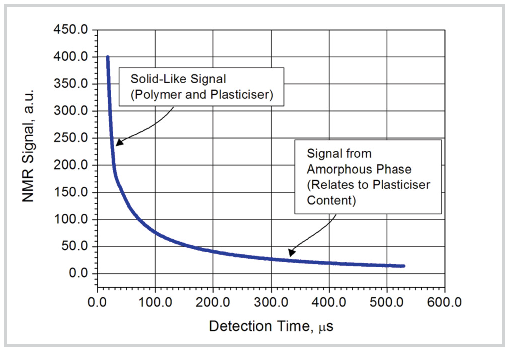
Fig. 1 — Typical NMR signal from polymer
Calibration
Only two well known standards are required to calibrate the MQC+. However, it is recommended that the instrument is calibrated using 3–6, preferably more, standards with known plasticiser contents evenly spread over the range of interest. NMR is a comparative technique therefore cannot be more accurate than the reference technique against which it is being compared; error is reduced by analysing more reference samples.
Measurement
PVC samples are poured into 26 mm glass NMR tubes up to a predefined mark and weighed. For optimal precision, the sample tubes are placed in a temperature controlled conditioning block at 40°C for at least 20 minutes prior to analysis. Measurement time is 16 seconds per sample.
Results
Figure 1 shows that a simple linear calibration can be generated using just four samples of PVC with plasticiser content values varying from 18 to 40% giving a standard deviation of 0.16%. A separate calibration will be required for each plasticiser used. The precision of measurement, obtained by taking ten successive repeats of the same sample at 35%, is +/- 0.06%.
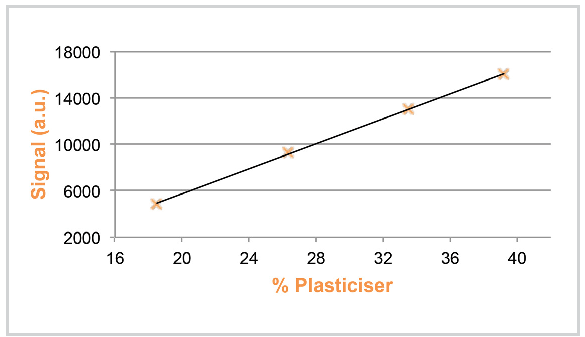
Fig. 2 — NMR calibration for plasticiser in PVC
Conclusion
- NMR is very stable over the long term and rarely needs calibration adjustment
- NMR is insensitive to the air voids between the pellets or grains of powder
- Measurement precision is good compared to wet chemistry methods
- Sample measurement time is rapid
- The NMR technique is non-destructive so the same sample may be measured several times before being analysed by other techniques
Complete Package
Oxford Instruments offers a package especially tailored to the measurement of plasticiser content in PVC.
- MQC+23 Benchtop NMR Analyser including:
- 0.55 Tesla (23 MHz) high homogeneity magnet
- Probe for 26 mm diameter sample tubes (14 ml sample volume)
- Integrated system controller (no external PC required)
- Integrated flat-screen display
- MultiQuant software including RI Calibration, RI Analysis, and the EasyCal ‘Plasticiser in PVC’ application
- Test/tuning samples
- 26 mm glass tubes
- PTFE stoppers
- Stopper insertion/removal tool
- User manuals
- Method sheet
Optional items are:
- A dry heater and aluminium block with holes for sample conditioning at 40°C
- A precision balance