Introduction
Hydrochloric acid is one of the most widely used reagents in chemical laboratories and industrial processes. Accurate
knowledge of acid concentration is essential, as changes in concentration during storage or handling can lead to
inconsistencies in experimental outcomes and process performance.
Nuclear Magnetic Resonance (NMR) spectroscopy is a powerful analytical technique that provides rapid, non-destructive
quantitative information with minimal sample preparation. The X-Pulse Broadband Benchtop NMR Spectrometer combines
high performance with low operational costs, making NMR-based quantification accessible to a broad range of
laboratories in both academic and industrial settings.
In this application note, a rapid method for determining hydrochloric acid concentration is demonstrated using a
capillary-based referencing strategy and concentration-dependent chemical shift measurements on the X-Pulse.
Hydrochloric Acid Concentration Determination
A simple experimental approach was developed to determine hydrochloric acid concentration using a reusable capillary
reference. Tetramethylsilane (TMS) was sealed inside a glass capillary and positioned within a standard 5 mm NMR tube
containing hydrochloric acid solution (Figure 1). This arrangement provided a stable reference signal whilst avoiding
direct contact between the reference compound and the highly acidic sample.
Hydrochloric acid solutions covering a concentration range from 0 to 12 mol/ℓ were prepared and analysed using the
X-Pulse Broadband Benchtop NMR Spectrometer. Standard ¹H FID experiments were acquired without deuterium lock using a
single scan and a relaxation delay of 3 s. Each sample was measured three times to assess reproducibility, with
spectra referenced to the TMS signal contained within the capillary.
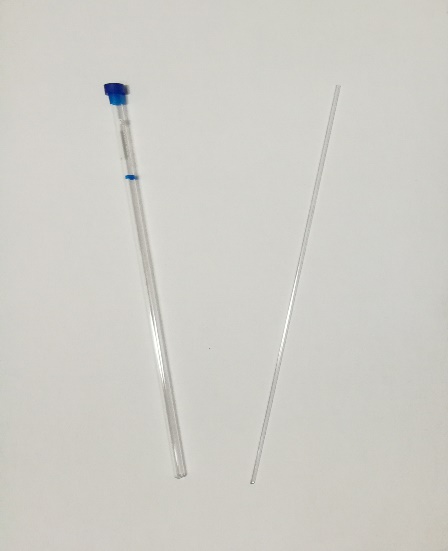
Fig. 1 — Sealed TMS-containing capillary positioned inside a standard 5 mm NMR tube for external
referencing.
Initially, ¹H NMR spectra were acquired without the capillary reference. Each experiment required approximately 9
seconds, allowing the complete concentration series to be analysed within only a few minutes. A systematic downfield
shift of the water resonance was observed with increasing hydrochloric acid concentration, suggesting a clear
relationship between chemical shift and sample concentration (Figure 2). However, without an external reference, the
influence of magnetic field drift could not be excluded.
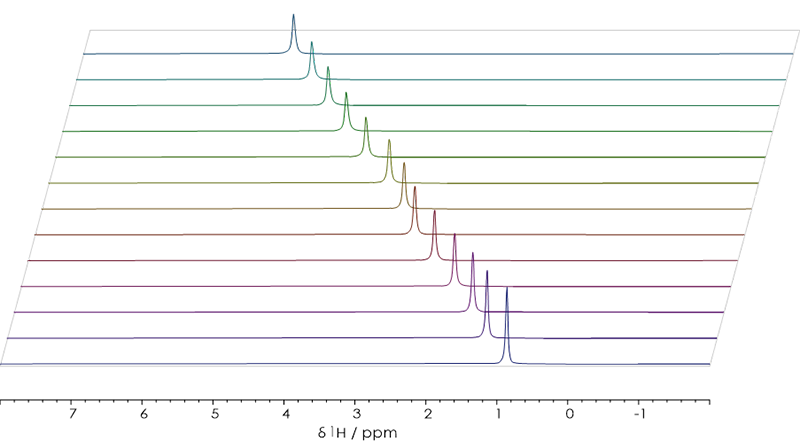
Fig. 2 — Stacked ¹H NMR spectra of hydrochloric acid solutions acquired without an external reference.
To provide a stable chemical shift reference, the experiments were repeated using the sealed TMS capillary. TMS is
not suitable for direct addition to the aqueous hydrochloric acid samples; its isolation within the capillary
therefore provides a convenient and reusable external reference whilst leaving the sample unchanged.
With the capillary in place, the concentration-dependent chemical shift behaviour was confirmed, with good
repeatability observed across the investigated concentration range (Figure 3).
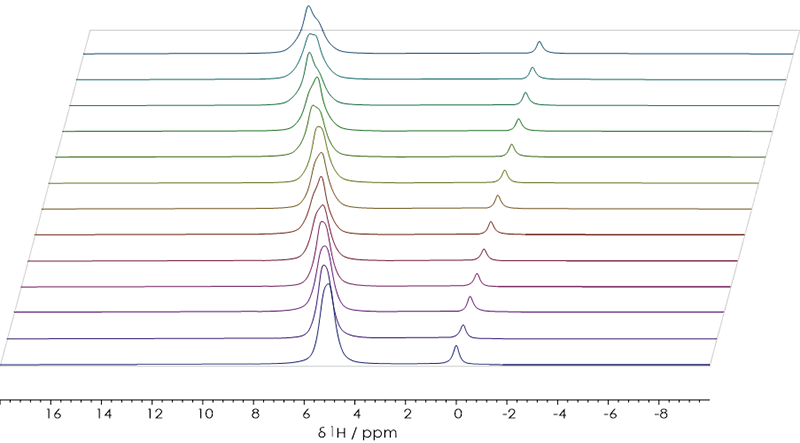
Fig. 3 — Stacked ¹H NMR spectra of hydrochloric acid solutions referenced using the sealed TMS capillary.
The mean chemical shifts and standard deviations obtained from three replicate measurements of each hydrochloric acid
concentration are summarised in Table 1.
Table 1. Mean 1H chemical shifts and standard deviations for hydrochloric acid solutions between 0 and
12 mol/ℓ (n = 3).
| HCl Concentration (mol/ℓ) |
Average Chemical Shift (ppm) |
Standard Deviation (ppm) |
| 0 |
5.052 |
0.011 |
| 1 |
5.523 |
0.020 |
| 2 |
5.733 |
0.007 |
| 3 |
6.132 |
0.018 |
| 4 |
6.377 |
0.018 |
| 5 |
6.694 |
0.009 |
| 6 |
6.973 |
0.009 |
| 7 |
7.355 |
0.015 |
| 8 |
7.833 |
0.005 |
| 9 |
7.953 |
0.001 |
| 10 |
8.529 |
0.004 |
| 11 |
8.7725 |
0.0036 |
| 12 |
9.1082 |
0.0042 |
A strong linear relationship was observed between 1H chemical shift and hydrochloric acid concentration over the
investigated range (Figure 4). The mean chemical shift obtained from three replicate measurements at each
concentration was used to construct the calibration curve. Linear regression produced the calibration equation:
y = 0.3341x + 5.0750
where y is the measured 1H chemical shift (ppm) and x is the hydrochloric acid concentration (mol/ℓ). The resulting coefficient of determination (R² = 0.9964) demonstrates a strong correlation between chemical shift and concentration across the 0–12 mol/ℓ
range.
The calibration relationship can therefore be used to estimate the concentration of an unknown hydrochloric acid
solution directly from its measured 1H chemical shift. Rearranging the calibration equation gives:
x = (y − 5.0750) / 0.3341
enabling rapid concentration determination from a single chemical shift measurement.
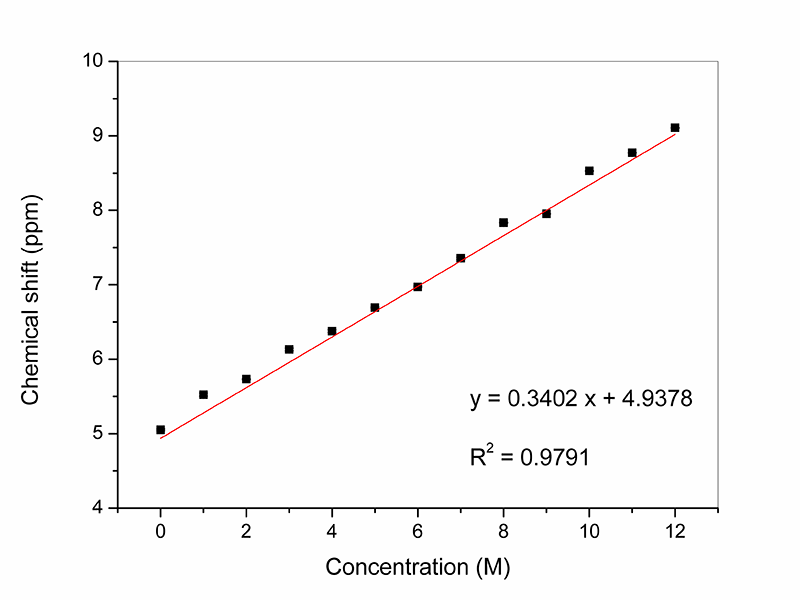
Fig. 4 — Calibration curve showing the relationship between 1H chemical shift and hydrochloric acid concentration from 0–12 mol/ℓ. Data points represent the mean of three
measurements at each concentration, and the solid line represents the linear regression fit (y = 0.3341x + 5.0750;
R² = 0.9964).
Unlike conventional integration-based qNMR methods, which require appropriate relaxation delays to obtain accurate
quantitative integrals, the approach presented here derives concentration from chemical shift rather than signal area.
This enables rapid single-scan measurements and substantially reduces acquisition time.
Compared with conventional acid-base titration, the method requires minimal sample preparation, is non-destructive
and avoids the use of additional titration reagents. Whilst pH measurement provides a convenient approach for dilute
aqueous acids, conventional pH measurements become less reliable for highly concentrated strong-acid solutions, where
non-ideal solution behaviour and electrode response can complicate interpretation. The reusable capillary reference
also eliminates the need for deuterated solvents or directly added internal standards, providing a simple and
economical workflow for routine laboratory measurements.
Although demonstrated here using hydrochloric acid, the chemical shift-based approach could potentially be adapted to
other acid systems where a suitable relationship between concentration and chemical shift can be established.
Safety Considerations
Concentrated hydrochloric acid is highly corrosive and produces irritating fumes. Appropriate laboratory controls and
personal protective equipment should therefore be used during sample preparation and handling in accordance with local
risk assessments and safety procedures. NMR tubes and sealed reference capillaries should also be inspected for damage
before use, and appropriate precautions taken when handling concentrated acid samples in glassware.
Conclusions
This work demonstrates a rapid and straightforward method for determining hydrochloric acid concentration using the
X-Pulse Broadband Benchtop NMR Spectrometer.
Using a reusable TMS-containing capillary as an external chemical shift reference, a clear relationship between
1H chemical shift and hydrochloric acid concentration was observed across the investigated 0–12 mol/ℓ
range. The chemical shift-based approach enables rapid, single-scan measurements without the need for deuterated
solvents or lengthy sample preparation.
These results highlight the X-Pulse as a practical platform for rapid, non-destructive chemical analysis and
demonstrate the potential of chemical shift-based NMR methods for routine concentration measurements.