Aim
To check the quality of MOVPE (Metal-Organic Vapour Phase Epitaxy) overgrowth above an array of GaN nanotubes. One sample has been overgrown with a SiN mask on top of the tubes, while for the other sample, the mask has been removed.
Challenge
Traditional GaN growth on sapphire substrates results in high densities of threading dislocations (TDs). By producing GaN nanocolumns, the TD density is reduced and consequently, optical and electrical properties are improved. However, the crystal growth must be carefully optimised and controlled.
Solution
GaN samples containing a high density of nano-columns can be quickly and non-destructively analysed using an Ultim Extreme EDS detector optimised for high spatial resolution, using low voltage and low current analysis in the SEM.
Results
The bottom left and middle maps of Figure 1 show areas rich in contaminants approximately 200-500 nm in size that were not directly observable in electron images. They can be tracked in O and C Kα EDS maps. The top middle map shows incomplete crystal coalescence revealed by the SiN mask underlayer. The righthand column highlights parts of the sample where the SiN mask hasn't been completely removed, and the N Kα map shows incomplete crystal coalescence due to the incorporation of impurities.
X-ray maps were collected with Ultim Extreme detector in just 10 minutes at 5 kV and 500 pA.
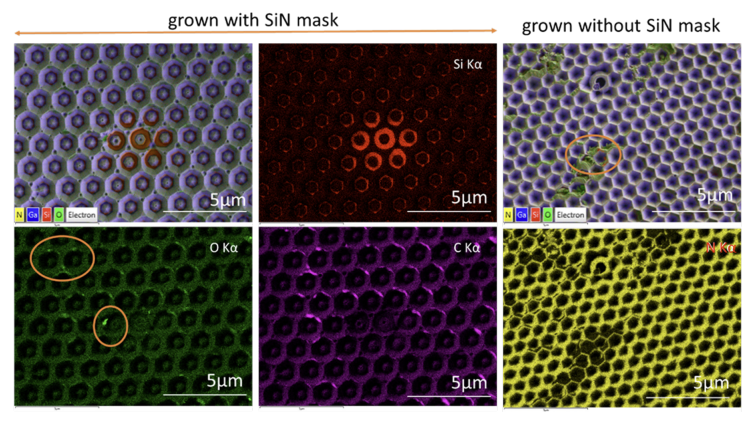
Figure 1. X-ray maps collected with Ultim Extreme detector in just 10 minutes at 5 kV and 500 pA.
Conclusion
Ultim Extreme is a valuable inspection tool for MOVPE growth optimisation. This work can help determine the optimum conditions for crystal growth by checking crystal coalescence and contaminant incorporation in order to help produce high quality GaN nanostructures.
Acknowledgments
University of Bath (Dr P Shields) and University of Strathclyde (The Semiconductor Spectroscopy and Devices research group) for providing the samples and useful discussion.