Summary
Serial numbers are widely used as a means of identifying otherwise identical parts, ranging from keys and firearms to bike frames and passports. Hence they can be of great value in tracing the origin or history of an item. As such, it is common to find that serial numbers have been removed when dealing with stolen or counterfeit parts. The ability to reconstruct a serial number which has been removed is therefore of great use when trying to trace an item e.g. in a forensic setting. Here, we demonstrate the ability of EBSD to detect otherwise invisible plastic deformation introduced to the sample by the engraving process – allowing the reconstruction of a polished away serial number.
Introduction
Serial numbers can be applied to an item in a number of different ways. Here we look at serial numbers which have been engraved into a metal – a typical method used for identifying keys and firearms.
Electron backscatter diffraction (EBSD) is a surface sensitive technique which is typically used to identify crystal structures, measure grain size and texture within materials. The technique is also sensitive to deformation and can be used to identify areas with high levels of deformation within crystalline materials.
Here, we consider a key with an engraved serial number. During the engraving process damage is introduced to the material below the actual engraving. This means that if the serial number is removed by grinding/polishing, a trace of it, invisible to the eye and electron imaging, remains. Here, we reconstruct the actual serial number by imaging this damage with EBSD band contrast.
Sample Preparation
A key with an engraved serial number had the engraving scratched off so that it was no longer visible to the human eye as shown in Fig. 1. The area which had contained the serial number was then cut out and mechanically ground and polished by colloidal silica.
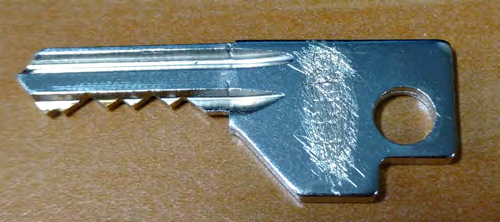
Fig. 1. A key with an engraved serial number scratched off. The serial number is now illegible.
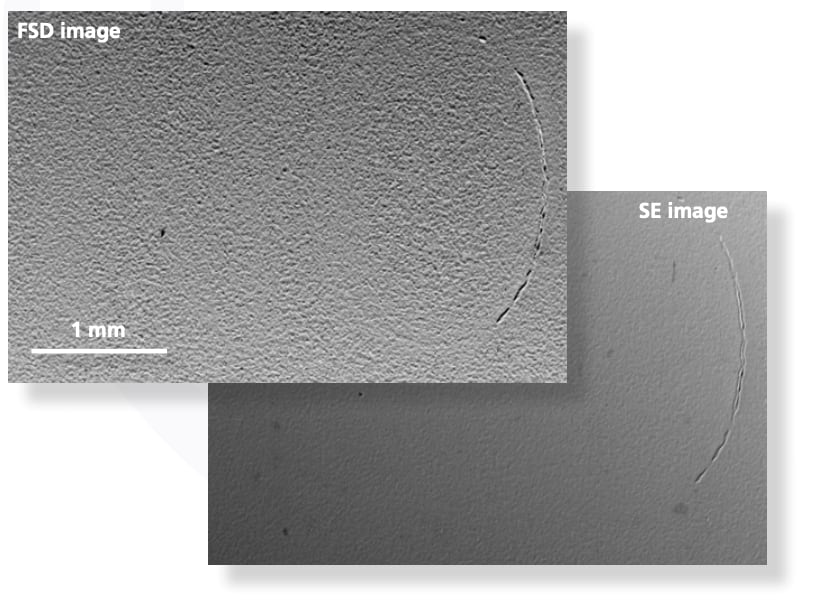
Fig. 2. Forescatter Diode (FSD, upper) and Secondary Electron (SE, lower) images show that only a partially visible letter “O” in the serial number is seen using traditional SEM techniques.
Method
The area where the serial number had been engraved was mapped in the SEM at low magnification using AZtec. Secondary electron (SE) and forescattered electron (FSD) images were acquired along with an EBSD map. The electron image shown in Fig. 2 shows that the first part of the serial number was partially removed by the polishing process. Only a part of the "O" is still visible – indicating the engravings were not done to the same depth for all the characters.
EBSD data can be used to study orientation changes within a material – therefore indicating the damaged areas. However, a more simple visualisation is to look at a map showing the variation in the pattern quality. This is shown in the band contrast map in Fig. 3. Band contrast is influenced by a variety of factors including crystallographic phase, orientation, surface contamination and sample preparation but also variations in deformation. The regions with greater deformation will have lower pattern quality and appear as dark in the band contrast map.
In the band contrast map shown on Fig. 3, it is clear to identify both letters "NO" whereas the SE and FSD images only show a part of the "O".
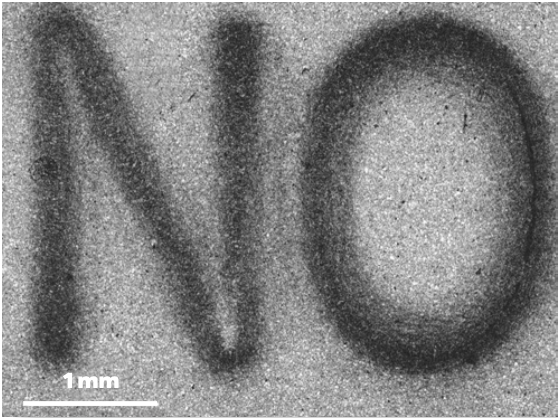
Fig. 3. Band contrast map of same area as the electron images in Fig.1.
Having shown in principle that the original engraving can be read, a larger area of 13 mm x 3.2 mm was mapped in order to read the whole serial number "NO1645" of the test key, as shown in Fig. 4. The EBSD scan of the whole serial number took 10 minutes with a pixel size of 8 µm and a 970 Hz acquisition speed.
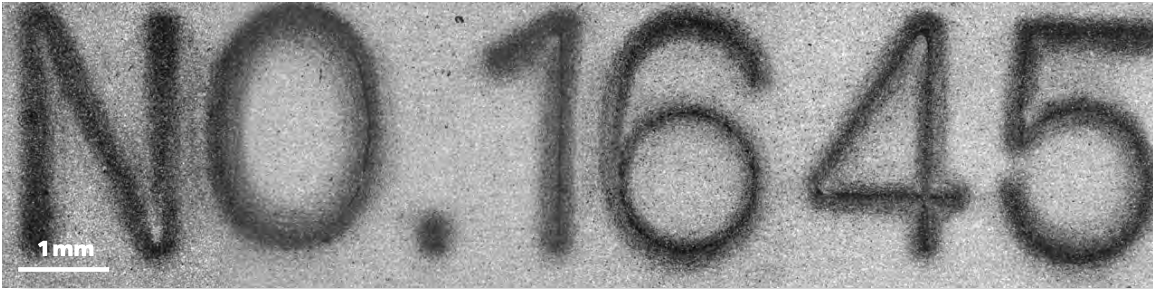
Fig. 4. Band contrast maps covering the whole serial number.
Conclusion
EBSD can be used to reveal an original engraved serial number on a crystalline material as the deformation layer created during the engraving process exists deeper than the visible serial number. This process is fast and of direct relevance to a forensic setting where a quick determination of a removed serial number from a range of items including keys or firearms could be of great importance.