


AFM Tech Refresh

Is your AFM still giving you the confidence your work demands?

Your research, publications and commercial decisions depend on the measurements your AFM produces.
Request a Technology Review

An ageing AFM can continue to produce good images long after it has started to limit what you can confidently measure.

The issue may be resolution, acquisition speed, reproducibility, functional characterisation, sample compatibility or simply the reliability of having the instrument available when you need it.

For researchers, the stakes are particularly high. Years of research, publications, grants and career progression can ultimately depend on the quality and credibility of the data generated by the instrument.

For commercial scientists, those same measurements can influence development, qualification, quality and failure-analysis decisions.

A technology refresh is not simply about buying a newer AFM. It is about ensuring the instrument behind your results is capable of delivering the evidence you need, with the confidence you need.

Three AFM platforms.
One question: What does your work require next?

Award-winning technology for your reserach 

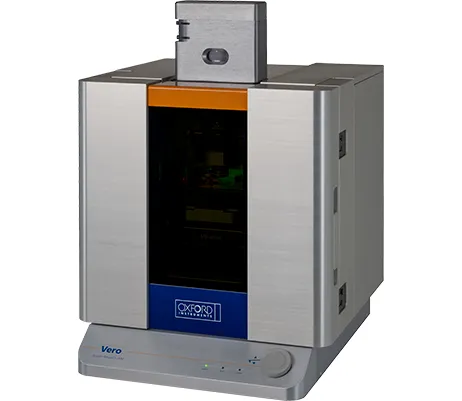
Vero AFMs are next-generation AFMs that precisely and accurately measures true tip displacement using Quadrature Phase Differential Interferometry (QPDI). 

Built on the unrivaled stability and performance of the Cypher AFM family, this unique patented QPDI innovation enables Vero AFMs to provide results with higher accuracy, precision, and repeatability.

Find out more

Performance when the limits of AFM matter 

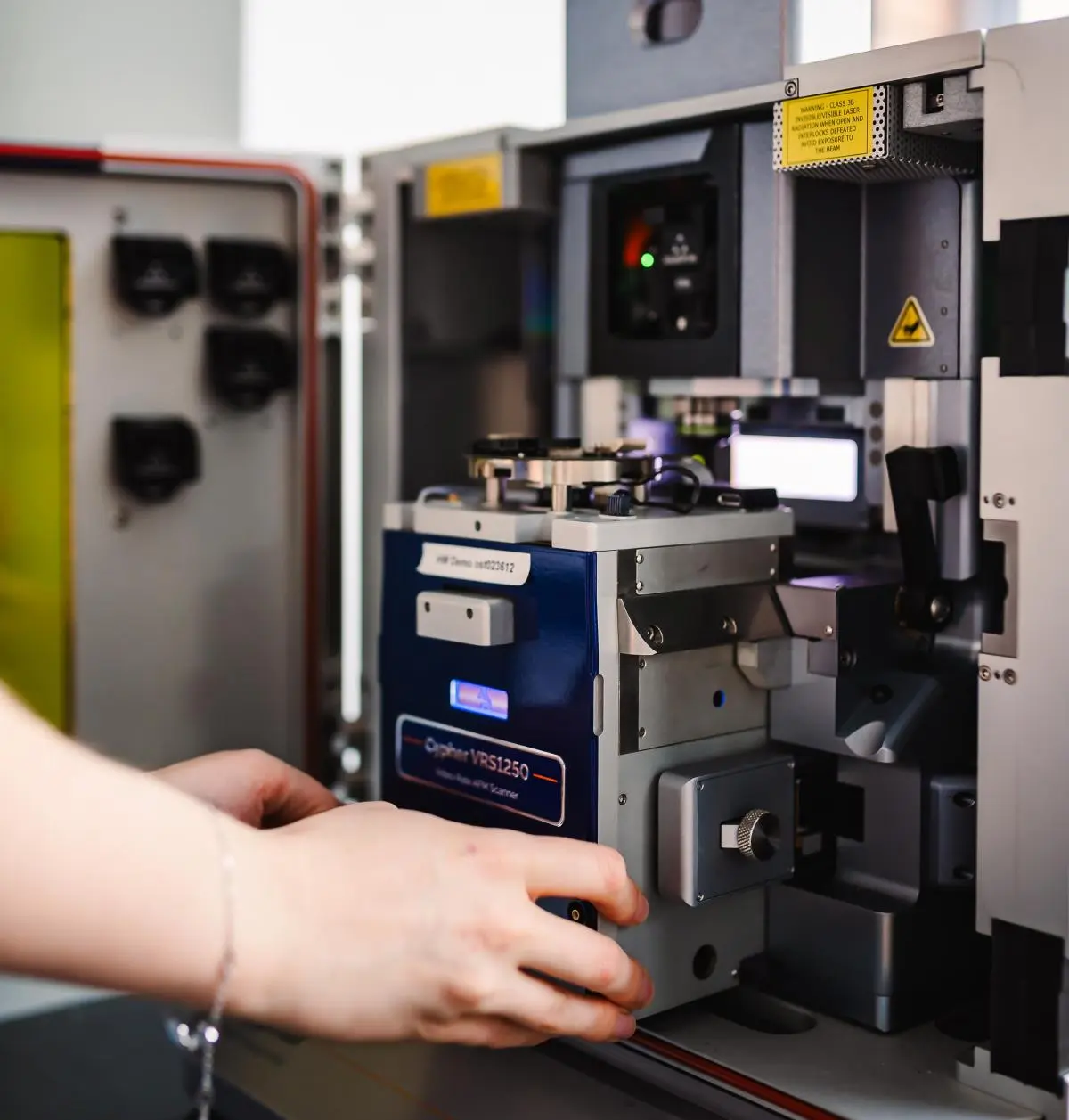
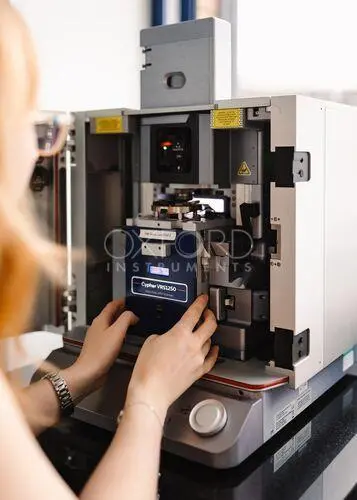
Cypher is designed for applications where resolution, sensitivity, stability and speed define what can be measured. 

It provides a platform for demanding high-resolution, high-speed and advanced functional applications. 

Find out more

High performance with productivity built in 

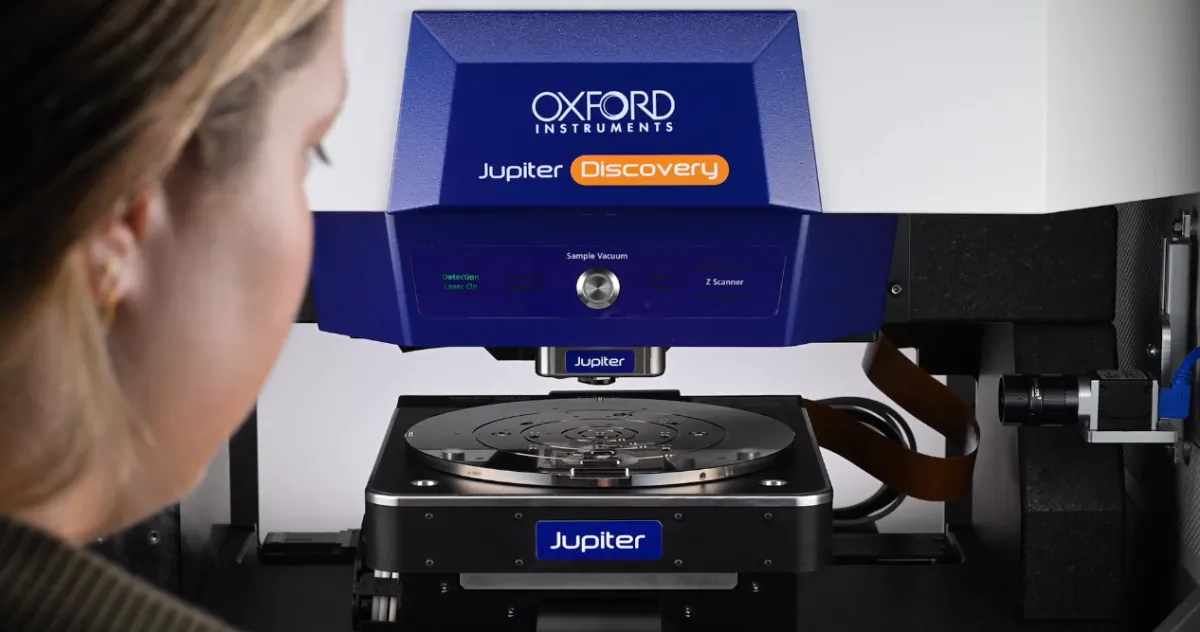
Jupiter combines advanced AFM capability with a workflow designed around productivity, large samples, ease of use and efficient measurement. 

It is designed for teams that need to make advanced AFM capability accessible across a broader range of users and applications. 

Find out more

Versatility for demanding research 

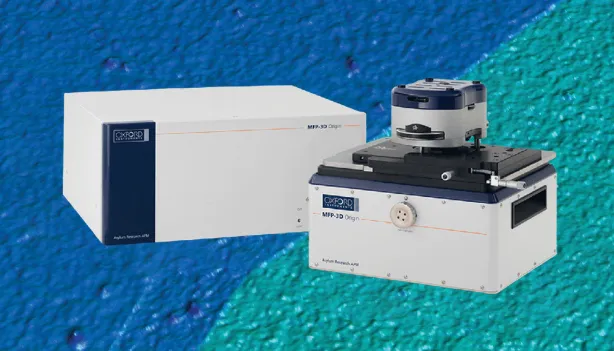
MFP combines high-performance AFM with broad imaging, mechanical, functional, liquid and application-specific capabilities. 

It is designed for researchers who need breadth and flexibility across evolving applications and sample types. 

Find out more

Five signs your AFM may be becoming the limiting factor

01 - Resolution & sensitivity

You can see the feature. Can you measure it with confidence?

As applications become more quantitative, users increasingly need to distinguish subtle nanoscale differences while measuring properties such as adhesion, stiffness, conductivity and local heterogeneity.

AFM platforms should provide the sensitivity, stability and control needed to move beyond visualisation towards quantitative nanoscale characterisation.


02 - Speed & throughput

Is the measurement taking longer than the experiment?

Slow acquisition limits dynamic studies, repeat measurements, sample throughput and access to the instrument. It can turn a dynamic process into a static snapshot and create queues that constrain everyone using the system.

AFM architectures can increase acquisition speed and workflow efficiency, allowing more data to be collected in the same instrument time.

03 - Reproducibility & data integrity

Can you be certain the difference is in the sample?

Drift, vibration, environmental variation and inconsistent measurement conditions can undermine otherwise valuable nanoscale data.

A more stable, controlled platform provides a stronger foundation for repeatable measurements across samples, users and experiments, helping ensure the result can stand up to scrutiny.

04 - From imaging to functional insight

Knowing where a feature is may not tell you what it is.

Topography can reveal a defect, particle, domain or aggregate. Advanced AFM can add mechanical, electrical and other functional information, while correlative approaches can connect nanoscale structure with complementary measurements.

The result is a move from seeing a feature to understanding its significance.

05 - Capability & continuity

Can you confidently build your next programme around your current AFM?

Ageing electronics, unsupported software, limited environmental capability and increasing maintenance requirements can gradually turn a critical research tool into a constraint.

For researchers, this is more than an operational risk. Your career may ultimately depend on results generated by the instrument.

For commercial teams, the same capability may underpin customer commitments, quality decisions and product development.

Our AFM platforms provide a supported foundation for today's applications and the flexibility to develop tomorrow's.

What is the cost of continuing with an AFM you are already questioning? 

The cost of an AFM is not simply its purchase price.

It can include outsourced measurements, repeated experiments, lost instrument time, maintenance, downtime and projects that cannot be supported with confidence.

For researchers, there is another cost that is harder to quantify: the opportunity to generate the data needed for the next paper, grant, collaboration or career milestone.

For commercial scientists, the consequences can extend to delayed development, qualification decisions, customer commitments and quality investigations.

A technology refresh should therefore be assessed against the value and risk attached to the work, not simply the price of the instrument.

Request a Technology Review